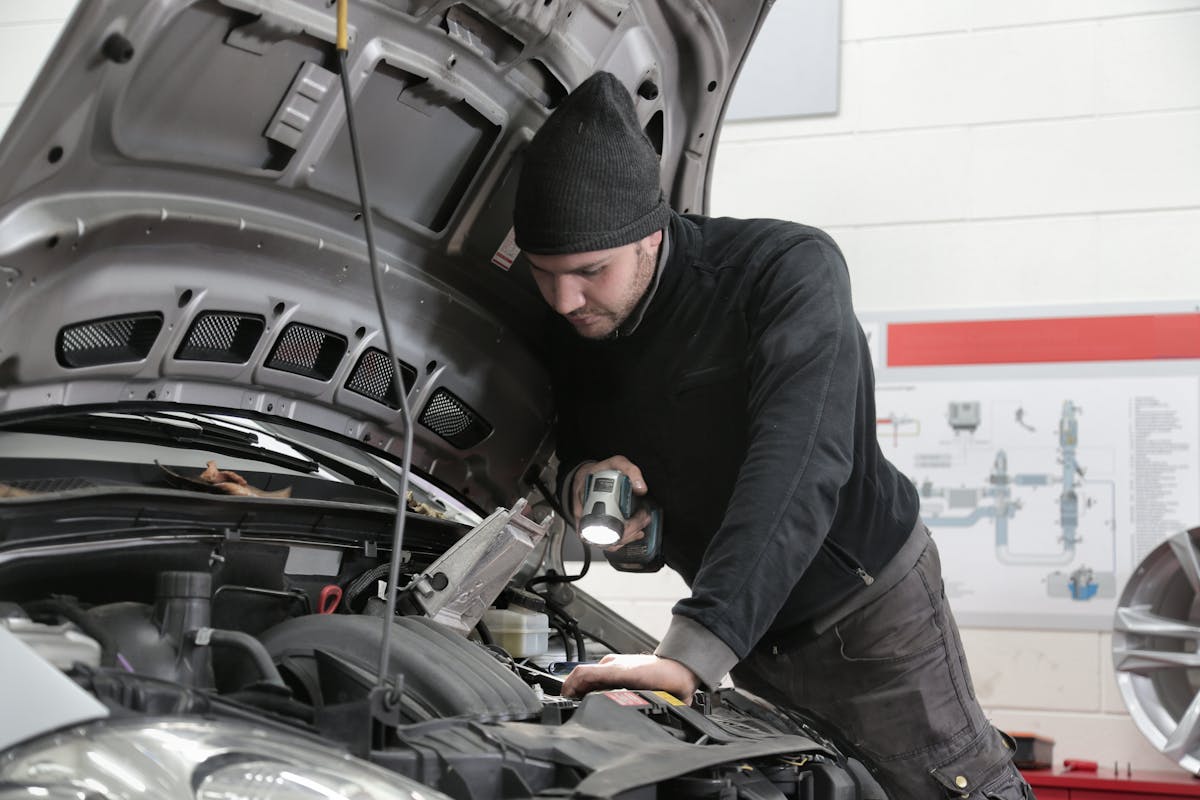
Photo via Pexels
There is a reason convertibles sell in Southwest Florida. Pine Manor is a residential community just south of Fort Myers, close to the interstate and the shops, and on a clear winter morning the drive north on US-41 with the top down is one of the simple pleasures of living here. The beach is close, the sun is out most of the year, and a car that lets the outside in feels like it belongs. But a convertible or a beach car in this climate is also a car with specific vulnerabilities, and buying one without checking them is how a dream car becomes a repair bill.
The issues are not mysterious. A convertible top is a moving part that keeps out rain, and Florida rain is heavy, sudden, and frequent. Salt air reaches inland from the coast and corrodes metal. Sand gets everywhere, and it gets into places that wear out mechanisms. Sun bakes interiors and fades paint. None of this means you should not buy a convertible or a beach car in Pine Manor. It means you should buy one with your eyes open, checking the things that actually fail here.
This guide covers the convertible top, the salt air, the sand, and the checks that matter before you buy. Our general convertible buying guide covers the same ground statewide, and our complete guide to buying a used car in Pine Manor walks through the local buying steps. This article goes deeper on what open-top and beach life does to a car in this town.
The convertible top: the most important check
The top is the whole car, in a sense. A convertible with a top that leaks, sticks, or tears is not a convertible you can enjoy, and top repairs are among the most expensive fixes on these cars. When you look at a used convertible, operate the top yourself, more than once. Put it down, put it up, and watch how it moves. It should move smoothly and steadily, without hesitation, grinding, or jerking. If it stops halfway, moves slowly on one side, or makes a straining noise, the mechanism or the hydraulics need attention.
Check the top material closely. On a soft top, look for tears, thin spots, worn seams, and fading. Feel the fabric and look at it in daylight. A top that has lived in the Florida sun for years will show it: faded color, stiff fabric, and seams that are starting to separate. On a hard top, check the seals around the edges and the operation of the folding mechanism. Look for water stains on the headliner or the interior trim, because a stain is evidence of a leak, even if the top looks fine today.
Test for leaks the practical way. If the seller allows it, run water gently over the top and the seals and check inside for drips. Pay special attention to the seals where the top meets the windshield header and where it meets the body behind the seats, because those are the places that leak first. A small leak in a Florida downpour becomes a soaked interior quickly, and a soaked interior becomes mold, ruined electronics, and a smell that never quite goes away. If you find a leak, factor the repair into your decision, and get a real sense of what it costs before you buy, not after.
Check the rear window too. On a soft top, the rear window is often plastic, and it clouds, cracks, and scratches with age and sun exposure. A cloudy rear window is a safety problem, because you cannot see behind you clearly. On a hard top, the rear window is glass and generally holds up better, but check the seal around it all the same.
Salt air: the slow corrosion
Pine Manor is inland compared to Fort Myers Beach or Sanibel, but salt air still reaches this far, and a car that has spent years near the coast carries the evidence underneath. For a convertible, salt air is doubly important, because the top mechanism, the latches, and the exposed metal parts of the folding roof are all vulnerable to corrosion.
Get underneath the car and look at the underbody, the frame, the suspension, and the exhaust. Surface rust on an older Florida car is common, but flaking metal or rusted-through panels are a different story. Look at the convertible top mechanism itself: the hinges, the latches, and the hydraulic cylinders. Corrosion on those parts makes the top stick, squeak, and eventually fail. Operate the top and listen. A smooth, quiet operation is a good sign. Grinding, squeaking, or hesitation is not.
Check the wheels and the brakes too. Salt air corrodes wheels, especially chrome or polished wheels, and it accelerates brake wear. Look for pitting on the wheels and check the brake rotors for heavy rust. A car that lived near the water will show it on the brakes first. Our flood and salt-air damage guide explains the full underbody check, and it applies to every car in this climate, convertible or not.
Sand, sun, and the beach car interior
A beach car lives a different life from a commuter car. Sand gets into the seats, the carpet, the door pockets, and the mechanisms of the windows and the convertible top. A little sand is normal for any car in Southwest Florida. A lot of sand, ground into the carpet and the seat fabric, tells you the car spent serious time at the beach without being cleaned, and sand is abrasive: it wears out seat fabric, scratches interior trim, and gets into window regulators and door locks.
Look at the interior with that in mind. Check the seats for wear, fading, and sand ground into the fabric. Leather or vinyl seats handle beach life better than cloth, because sand brushes off and wet towels do not soak in. If the car you like has cloth seats, check them carefully for staining and wear, and budget for seat covers. Check the carpet under the mats. Sand and salt collect there, and damp carpet under a mat is a sign of a leak or a car that was never dried out properly.
Sun is the other beach-life problem. A car parked at Fort Myers Beach or Sanibel in the summer sun takes a beating: the dashboard cracks, the seats fade, the paint oxidizes, and the convertible top fabric degrades. Look at the dashboard for cracks, the seats for fading, and the paint for oxidation, especially on the hood, the roof, and the trunk. A car that was garaged or covered will show far less sun damage than one that lived outside, and the difference is visible in minutes.
The test drive with the top down and up
Take the convertible for a test drive twice, in a sense: once with the top down and once with the top up. With the top down, drive north on US-41 and feel how the car behaves in the open air. Listen for wind noise, rattles, and anything loose. A convertible should feel solid with the top down, not shaky or rattly. Check the mirrors and the blind spots, because the folded top can block the rear view on some cars.
With the top up, drive the same route and listen again. The cabin should be reasonably quiet, and there should be no wind whistling through gaps in the seals. If you hear whistling, the seals are worn or the top is not seating properly, and that is a leak waiting for the next downpour. Test the AC with the top up, because a convertible's AC has to work harder than a coupe's, and it should still get the cabin cold fast. Let it run for several minutes and make sure it stays cold with the top up.
Test the car on a rough road too, because convertibles flex more than coupes and a worn car will show it as rattles and shakes over bumps. Drive through a neighborhood street in Pine Manor with speed bumps and uneven pavement and pay attention to how the car feels. A tight, solid car is a good sign. A car that rattles and shudders over every bump has worn bushings or structural wear, and that is expensive to fix. Our 15-minute test drive checklist gives you the sequence.
History, title, and the paperwork
Read the vehicle history report before you buy, and read it for flood and accident history specifically. A convertible that has been in a flood is a particularly bad buy, because the water reaches the top mechanism, the electronics under the seats, and the interior in ways that are hard to repair. Our guide on how to read a vehicle history report explains what to look for, and our flood-risk checks for Pine Manor guide covers the local flood inspection in detail.
Check the title the same way you would for any used car. The VIN on the title should match the VIN plate on the dashboard and the driver's door jamb, and Florida requires title transfer within 30 days of the sale. If the title has a salvage or rebuilt brand, walk away. A convertible with a branded title has almost certainly had the kind of damage that ruins the top mechanism and the electronics.
Insurance deserves a call before you buy. Florida requires PIP and PDL coverage, and convertible insurance varies with the car. Call your insurer with the VIN and get a real quote. Registration happens at the Lee County Tax Collector's office, and Florida charges 6 percent state sales tax plus the county surtax, so have that set aside. If you are trading in your old car, bring its title and confirm any lien has been released. Our trading in your old car guide covers the steps.
Living with a convertible in Pine Manor
Owning a convertible here is a pleasure if you go in with a plan. Keep the top clean and treat the fabric with a protectant made for convertible tops, because the Florida sun and rain wear the material out faster than in most places. Keep the seals clean and conditioned, because dry seals crack and leak. When you park, use the top. It is tempting to leave the top down in a driveway, but a sudden afternoon thunderstorm can soak the interior in minutes, and summer storms here arrive with almost no warning.
Think about storage. A convertible that lives in a garage lasts far longer than one that lives in a driveway under the sun. If you do not have a garage, a breathable car cover helps, but it has to be breathable, not a plastic tarp that traps moisture. And think about the beach. A convertible is a wonderful beach car, but bring towels for the seats, shake out the sand before you drive home, and rinse the car after a beach day to get the salt off the paint and the underbody.
Finally, remember that the right convertible for Pine Manor is the one with a top that works perfectly, a body that is solid underneath, and an interior that has been looked after. A convertible that passes those checks is a car you will enjoy every time the sun comes out. Joe's lot is about ten minutes north on US-41 from Pine Manor, so you can come and look, operate the top yourself, and take a proper test drive without making a day of it.
Frequently asked questions
What is the most important thing to check on a used convertible? The top. Operate it yourself, more than once, and watch for smooth movement without hesitation, grinding, or jerking. Check the fabric for tears and worn seams, check the seals for leaks, and check the rear window for clouding. A top that leaks or sticks is an expensive problem.
Does salt air damage convertibles more than other cars? Yes, because the top mechanism, the latches, and the folding hardware are exposed metal parts that corrode. Get underneath the car and look at the underbody, and operate the top and listen for grinding or hesitation that suggests corrosion in the mechanism.
Can I drive a convertible in a Florida downpour? Yes, if the top and seals are in good condition. But test for leaks before you buy, because a small leak becomes a soaked interior fast in a summer storm. If you find a leak, get a real sense of the repair before you commit.
Are convertibles practical as a daily driver in Pine Manor? They can be, if the top works perfectly and the AC is strong. The daily drive up US-41 into Fort Myers is short, and a convertible is a pleasure on a clear morning. Just keep the top maintained, treat the fabric, and park under cover when you can.
What should I check inside a beach car? Look for sand ground into the seats and carpet, fading and cracking from sun exposure, and dampness under the mats that suggests a leak. Leather or vinyl seats handle beach life better than cloth, and a clean, dry interior is a sign the previous owner looked after the car.
Browse the current inventory to see the convertibles and beach-friendly cars available now, then drive up US-41 from Pine Manor for a look in person. Operate the top yourself, check underneath, and take a proper test drive. If you would rather talk it through first, call Joe at (239) 364-0709 or book an appointment and he will help you find a car that makes the most of the Florida sun.
Questions about a car?
Call Joe — he’ll give you a straight answer and, if there’s a car you like, have it ready for a test drive.
Book an appointmentBrowse inventory

